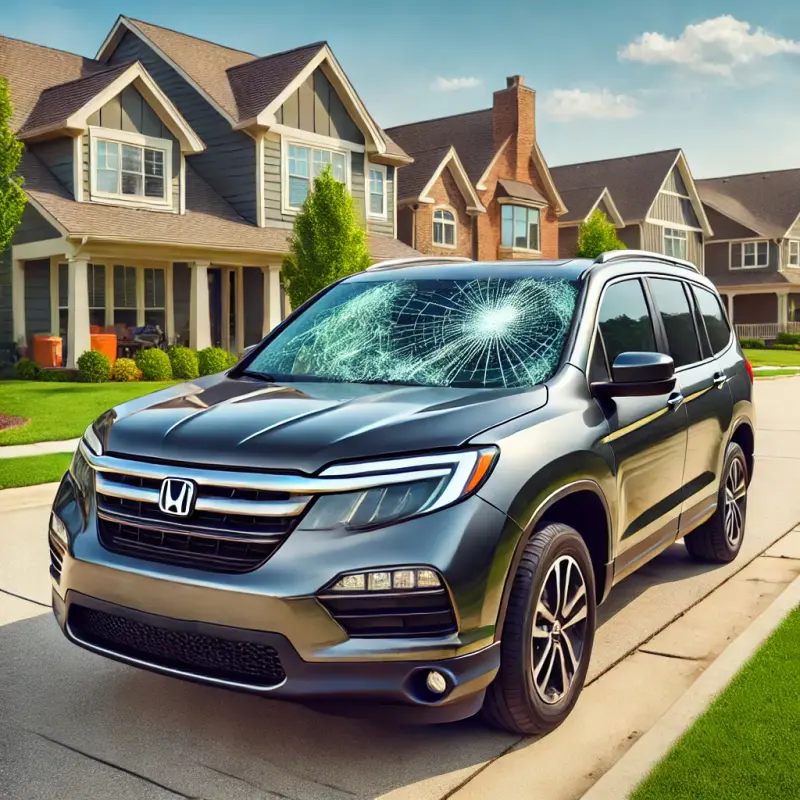
Anyone who has worked around late‑model vehicles knows the windshield stopped being just a piece of glass. It became a structural component, an optical lens for cameras, and a gateway to a network of sensors that help the driver stay in their lane, watch blind spots, and avoid collisions. That shift affects everything from how we inspect a chip to how we price a Windshield Replacement. It also changes the conversation with the customer. Safety features live and die by calibration, and calibration depends on glass, mounting, and process details that used to be background noise.
I have spent enough time in bays and parking lots to see the gap between theory and practice. A technician might nail the glass fit and still trigger a check ADAS warning two days later. A fleet manager might approve aftermarket glass to save a few hundred dollars, then find the adaptive cruise gets skittish in rain. This guide aims to connect dots for anyone making decisions around Auto Glass, from shop owners to insurance adjusters and careful drivers.
What ADAS actually sees through the windshield
Forward‑looking cameras live behind the rearview mirror on many vehicles. Depending on the brand, that single module may interpret lane lines, read speed limit signs, watch for pedestrians, and coordinate with radar for automatic emergency braking. It sees through a defined optical window in the windshield, often with a frit pattern that blocks glare and a clear zone with precise thickness. The glass curvature and wedge angle control how light refracts into the camera.
Even a small deviation in glass geometry or mounting location changes the camera’s perspective. Think of it as lifting a camera a few millimeters or tilting it a fraction of a degree. The software expects the horizon to be where the engineers calibrated it. If the camera now sees the world from a slightly different angle, the system may misjudge distance or wander within the lane. The car will often detect that and request calibration, but not always immediately.
Radar typically hides in the grille or bumper, separate from glass considerations. Still, some vehicles stack decisions from multiple sensors, so a camera that is one degree off can degrade fusion performance, especially at night or in heavy rain when the system leans more on whichever sensor has the clearest signal.
Why a windshield is no longer a generic part
Years ago, matching the outline and thickness got you 90 percent of the way there. Today, the material stack‑up matters. The camera zone frequently includes a precise laminate and, on many vehicles, an acoustic PVB interlayer that changes optical properties. Some windshields include an infrared reflective coating for heat reduction. Others add a dark band, a sensor gel pad for rain sensors, and an attachment for a driver monitoring camera facing inward.
Part numbers branch for reasons that don’t show at a glance. A BMW with head‑up display needs a different wedge angle than the non‑HUD version. A Toyota with lane tracing assist needs a specific frit pattern to ensure consistent contrast for lane detection. Mixing those up creates subtle problems. The HUD image can double or blur; the camera may pass static calibration but require constant steering corrections. You might not notice it in a quick test drive around the block.
If you request an Auto Glass Quote, the question set should include trim level, presence of HUD, heated wiper park area, lane departure, rain sensor, and what options display on the windshield. If the quoting process does not ask, the shop is guessing. That can cost time, because the right Windshield might be a different part number with longer lead time.
Calibration: static, dynamic, and when each applies
Most forward camera systems require calibration after Windshield Replacement. The methods fall into two broad families.
Static calibration uses printed targets or digital screens placed at measured distances and heights in front of the vehicle. The car or scan tool guides the process, and the camera aligns itself to those references. This demands controlled lighting, level floors, and accurate measurement. If a floor slopes by 0.5 degrees or lights cast hard shadows on the target, the camera can misinterpret edges. Shops that do this well invest in floor leveling checks, laser rulers, and light control.
Dynamic calibration relies on driving at a specified speed for a set distance under certain conditions, usually with clear lane markings. Some manufacturers require both: static to set the baseline geometry, dynamic to validate on real road data. Weather matters. Heavy rain, dirty lane lines, or low sun angle can fail a dynamic calibration. A technician needs a route that meets the criteria and enough time to repeat if traffic or weather interrupts.
When a vehicle says no calibration required, read that carefully. Some systems self‑calibrate over time, but only if the camera sits within tight mounting tolerances. If the bracket got bumped or the glass position shifted slightly, it can take hundreds of miles to settle, assuming the software allows it. Meanwhile, performance may be degraded. If you drive long highway trips with adaptive cruise as your co‑pilot, that is not acceptable. On vehicles with known sensitivity, I recommend calibrating proactively, even if the dash does not demand it.
The quiet importance of adhesives and cure times
Urethane does more than hold the windshield in. It defines the glass position and angle while curing. Every manufacturer specifies a safe drive‑away time based on adhesive type, humidity, temperature, and whether the vehicle has passenger airbags that rely on the windshield for support. Those times are not just legal cover. Moving the car before the adhesive reaches sufficient green strength can let the glass shift subtly when closing a door or hitting a pothole, which then alters the camera’s view.
I have seen cameras that calibrated in the bay lose alignment after an excited pickup truck owner slammed the door. The glass moved perhaps a millimeter at the top edge, barely perceptible, but enough to push the camera toward the top of its range. The next heavy rain and a set of faint lane lines were enough to trigger warnings. The cure is simple patience, a reminder to avoid door slams, and sometimes tape or support blocks to stabilize the glass during the early cure window.
OEM glass versus aftermarket options
This is where budgets and ideals collide. Quality aftermarket windshields from reputable makers often perform equivalently to OEM. Others do not. The differences that matter include optical distortion in the camera zone, consistency of the wedge angle, frit clarity, and bracket positioning. A tiny misprint of the dotted frit can create contrast patterns that confuse lane detection in certain light.
In practice, I see three outcomes. With a good aftermarket piece, calibration passes smoothly and the system behaves as before, saving the customer hundreds. With a middling one, calibration passes but the car feels twitchy in marginal conditions, leading to repeat visits and upset drivers. With a poor one, calibration fails outright, and you either start over with a better part or spend hours chasing ghosts. If a vehicle is particularly picky — many European models with HUD and complex camera stacks come to mind — I advise OEM glass or an aftermarket supplier with proven equivalence for that specific part number.
Insurance carriers vary. Some approve OEM only for vehicles under a certain age, some require proof that calibration failed with aftermarket. Document everything: part numbers, batch codes, calibration screenshots, before‑and‑after fault codes. Clear documentation shortens arguments and gets drivers back on the road safely.
The mounting bracket and why tape matters
Cameras do not bolt to glass directly. They clip into a bracket that is bonded to the inner surface. If that bracket is off, the camera is off. You will see instructions that read like a watchmaker’s manual: use a specific primer, position within a set of alignment marks, apply defined pressure for a few seconds, then hold with tape for a given time at a certain temperature. Follow them.
A common failure mode is a bracket that looks straight by eye but leans by a fraction. The camera then sits yawed or pitched beyond its internal adjustment range. Calibration either refuses to start or barely squeezes in with offsets that leave no room for thermal expansion. On hot days the plastic softens a touch, shifting the camera enough to throw faults. When a shop gets a stubborn case like this, the fix is to remove and rebond the bracket, not to run another calibration attempt.
Recalibration is not a one‑and‑done for the life of the car
Suspension work, wheel alignments, bumper repairs, and even tire size changes can influence ADAS perception. If the ride height changes by half an inch due to new springs, the camera’s geometry shifts relative to the road. On vehicles that fuse camera and radar, any change to the front fascia or emblem that covers the radar calls for recalibration. The same logic applies after minor front collisions, even if the glass did not crack.
I advise service advisors to look at each repair order for ADAS touchpoints. Replace a windshield, calibrate. Move a radar sensor, calibrate. Adjust a front camera bracket, calibrate. Align the suspension on a car known for tight tolerances, at least verify ADAS status with a quick road test and scan. The customer will not always ask, and many assume all sensors self‑heal. Some do, slowly, but the safety margin while they relearn is not a bet worth making.
Real‑world calibration hurdles no one mentions in brochures
The biggest enemy of static calibration is inconsistent light. Overhead LEDs that flicker at certain frequencies can create banding in camera images even if your eyes can’t see it. Shiny floors can reflect target patterns and confuse edge detection. Shops that invested in matte floor coatings and indirect lighting saw their pass rates improve.
Dynamic calibration can be equally fussy. A route that works in July might fail in February when plows wore off the paint. Sun angle near dusk can wash out lines in the exact segments where the algorithm expects clear contrast. I have driven extra miles to find a newer stretch of highway just to finish a calibration that failed repeatedly by the same exit. If you run a mobile Auto Glass Replacement unit, scout routes and keep alternates, and be honest about weather constraints.
Vehicles also differ in how quickly they throw an error if calibration drifts. Some Hondas alert within minutes. Certain German brands will tolerate a wider range but degrade performance quietly until the driver notices odd behavior. That quiet degradation is the uncomfortable middle ground. No fault code pops, yet the car follows lanes less confidently. A careful test drive, on a mix of surfaces, matters more than a green checkmark on a scan tool.
Communicating with customers, without jargon or scare tactics
Drivers depend on these systems, but many do not know what sits behind the mirror. They also balance safety with cost. The best conversations cover what changes with a Windshield Replacement, how calibration fits in, and why a particular glass recommendation makes sense.
I avoid overstating. ADAS can tolerate normal variation if installed and calibrated correctly. I also avoid minimizing. Skipping calibration to save time invites callbacks and undermines trust. If the only available glass today is an aftermarket part that has given you a 50‑50 success rate on this model, say so, and offer the choice to wait for OEM. If the driver must be back on the road now, set expectations: you may need to return for a swap or a second calibration, and you will stand behind the work.
Pricing should reflect the complexity. The old flat rate for a windshield is gone for most modern vehicles. When providing an Auto Glass Quote, break out calibration fees and explain what they cover: equipment, technician time, possible dynamic drive conditions. Customers respond better to plain language and a sense that you have a repeatable process.
Detecting glass‑related ADAS issues during a road test
A five‑minute loop around the block tells you very little. Put a few miles on the car in conditions that stress the system. Look for slight pinball behavior within the lane, delayed response to cuts‑in by vehicles ahead, or a high rate of false lane departure alerts. Pay attention to how the system behaves on less‑than‑perfect markings. A system that needs pristine paint may be a hair out of spec.
If you have a driver who uses adaptive cruise daily, ask about their habits. Some people never touch lane keep assist. Others rely on it for long commutes. Their feedback will guide the level of scrutiny needed. A rideshare driver or a long‑haul commuter may feel a small degradation that a once‑a‑week driver would miss.
What technicians wish parts managers and insurers knew
Good parts availability prevents corner‑cutting. When the correct windshield version is in stock, everyone wins. If only the base part shows as available, pressure mounts to make it work. The same applies to calibration time. A tight schedule squeezes error bars. Most static calibrations run 30 to 90 minutes if the bay is set up properly. Dynamic drives add another 20 to 60 minutes depending on traffic and weather. Add paperwork and QC. Expecting a two‑hour total for a complex replacement with calibration often sets the team up to rush.
Insurers who treat calibration as optional create friction later. If a claim approves glass but denies calibration reimbursement, shops sometimes try to bury the cost or skip the step. Neither ends well. What works is a policy that ties calibration reimbursement to documented procedures and verified results: pre‑scan, post‑scan, and if applicable, successful calibration logs with timestamps.
Edge cases: heated wiper park areas, HUD ghosting, and tint bands
The wiper park heater can create thermal gradients in the glass that confuse cameras until the car warms evenly. That is not a defect, but it can look like intermittent lane detection failure on cold mornings. A technician doing a dynamic calibration right after install, in winter, may fail and blame the glass. Allowing a full warmup can turn a no into a yes.
HUD ghosting usually points to the wrong wedge angle or the wrong interlayer spec for the display. The symptom is a double image, often most pronounced at night. This is not fixable with calibration, because the optics are wrong. The only cure is the correct windshield.
Aftermarket tint strips can creep into the camera zone, especially if placed low to block sun. Even a millimeter encroachment can darken part of the camera’s field, leading to inconsistent recognition. Shops should set a policy: do not apply tint in the camera window, and if a car arrives with such a strip, advise removal before calibration.
The business side: mobile versus in‑shop service
Mobile service wins when convenience matters and conditions cooperate. Static calibration can be tricky in driveways, but not impossible if you carry portable stands, levelers, and lighting. Dynamic calibration pairs naturally with mobile work, assuming you can find suitable roads near the installation site. Where mobile struggles is in extreme temperatures, high winds, or in neighborhoods with inconsistent lane markings.
Shops that run hybrid models often stage installations at the customer site and bring the car back to the shop for calibration. That adds logistics but raises pass rates. Safe drive‑away times complicate transport, so schedule accordingly. I have seen successful setups with pop‑up tents, portable mats, and battery‑powered lamps to tame reflections in parking garages. The investment pays off if your market leans heavily toward on‑site service.
A brief checklist for shops integrating ADAS into glass work
- Verify options by VIN and visual inspection, including HUD, rain sensor, camera count, and frit pattern. Confirm adhesive, primers, and bracket bonding procedures, and respect safe drive‑away times for the specific vehicle. Choose glass with proven optical performance for the model, and document part numbers and batch codes. Plan calibration method and environment in advance, with backup routes or bays if conditions change. Road test intentionally after calibration, scanning for codes and feeling for subtle behavior shifts on varied roads.
For vehicle owners: a short guide to making the right choice
- When seeking an Auto Glass Quote, provide your VIN and list features like HUD and lane assist to ensure the right part is ordered. Ask whether your vehicle requires calibration, how it will be performed, and whether the shop has the equipment. Clarify if the glass is OEM or aftermarket, and why the shop recommends it for your model. Plan time for curing and calibration. If weather or traffic could interfere, expect the shop to reschedule rather than rush. After the job, take a familiar route and pay attention to lane keeping and adaptive cruise; report anything that feels off.
Final thoughts from the bay floor
Modern safety systems deliver real benefits when the fundamentals are right. The glass must match the design intent, the bracket must be true, the adhesive must be given its due, and the calibration must be performed under conditions that let the camera see the world clearly. None of that is glamorous, yet it decides whether a warning light stays off and, more importantly, whether the system helps in that one moment when a driver needs it.
For shops, the path is process. Build a repeatable routine that respects the variables: correct Windshield selection, careful installation, transparent pricing, and rigorous calibration. For drivers, the path is informed choice. Ask the right questions, auto glass repair columbia budget for the full job rather than just the pane of glass, and insist on a test drive that proves the result. For insurers and fleet managers, align reimbursement with safe outcomes, not just parts lists.
Auto Glass work grew up fast with ADAS. The good news is that careful craft still wins. A windshield set square, an attentive calibration, and a road test with a technician who knows how a healthy system feels will keep the promise of these systems intact. That is the standard worth holding, whether you manage a dozen bays or just care about the finest piece of technology on the front of your car: a sheet of laminated glass that now sees as well as protects.